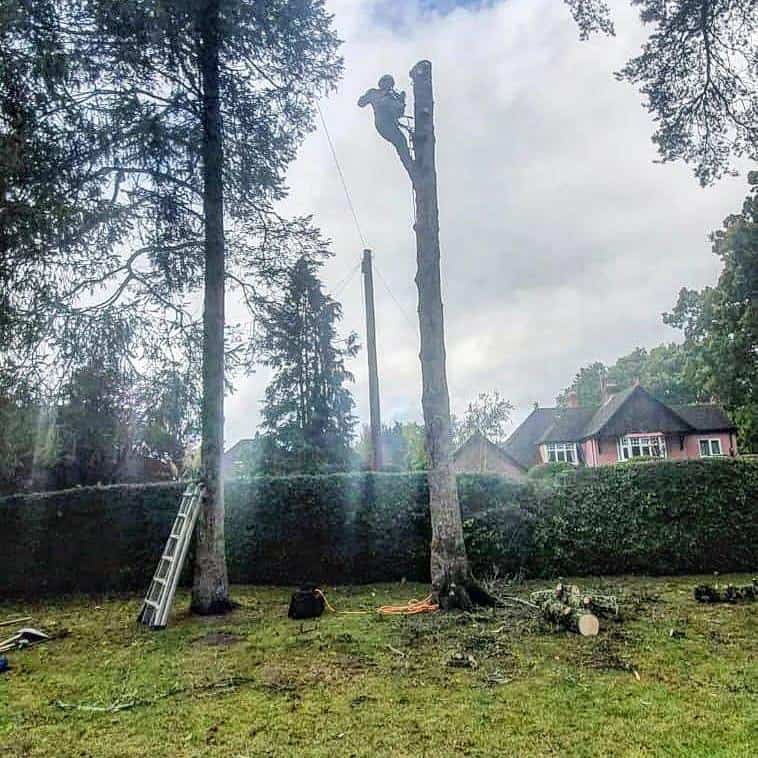
Tree cutting and tree pruning are often used to describe the same type of work, but they can involve very different approaches. Understanding the difference is useful for homeowners who want to maintain healthy trees, manage growth or address branches that have become damaged or problematic.
For properties in Filton, Bristol, professional tree care can help ensure that work is carried out with the condition, structure and surroundings of the tree in mind. Choosing the right approach starts with understanding what cutting and pruning actually involve.
What Is Tree Pruning?
Tree pruning involves selectively removing specific branches to improve the health, structure, safety or appearance of a tree. Rather than removing large sections unnecessarily, pruning focuses on making carefully considered cuts.
Depending on the tree and its condition, pruning may involve removing:
- Dead or dying branches
- Diseased or damaged growth
- Branches that cross or rub against one another
- Weakly attached branches
- Growth that is interfering with nearby structures
- Selected branches to improve the tree’s overall structure
The objective is to remove appropriate growth while retaining as much healthy tree structure as possible.
What Does Tree Cutting Mean?
Tree cutting is a broader term that can refer to the removal of branches or sections of a tree. In some situations, it may describe more substantial removal than routine pruning.
The correct method depends on why the work is required. Simply cutting branches without considering the tree’s natural structure can create unnecessary wounds, affect future growth and leave the tree with an unbalanced shape.
For this reason, tree cutting should not be treated as simply removing as much growth as possible.
Tree Pruning Is Usually More Selective
One of the clearest differences between pruning and general tree cutting is the level of selectivity involved.
Pruning normally aims to achieve a specific result while making carefully chosen cuts. For example, a tree may require deadwood removal or selective crown work to address a particular structural concern.
The amount removed should be appropriate for the tree. Excessive removal can place unnecessary stress on the tree and may encourage unwanted regrowth.
When Might Tree Cutting Be Necessary?
More substantial tree cutting may be considered when a tree has extensive damage, problematic growth or sections that need to be removed for safety or practical reasons.
For example, damaged branches following severe weather may need to be removed because they are no longer securely attached. Larger sections may also require attention where growth has become unsuitable for the surrounding space.
An assessment by a qualified tree professional can help determine how much material should actually be removed.
Why Correct Pruning Matters for Tree Health
Poor pruning can cause problems that may not be immediately obvious. Incorrect cuts can create larger wounds, damage the tree’s natural structure or encourage excessive regrowth.
Professional pruning considers factors such as branch unions, growth patterns and the position of the cut. This helps reduce unnecessary damage and supports a more natural shape.
The timing and extent of pruning should also be considered according to the tree species and its individual condition.
Tree Cutting and Pruning for Safety
Trees can develop dead, weak or damaged branches that present a potential hazard, particularly where they are located close to buildings, paths, driveways or areas used regularly by people.
Removing appropriate branches can reduce these risks while helping to retain the healthy structure of the tree. However, safety work should always begin with identifying the actual problem rather than automatically removing large amounts of growth.
How Professionals Decide Which Approach Is Suitable
Every tree is different, so the appropriate work should be determined following an assessment of the tree and its surroundings.
A professional tree surgeon will consider factors such as:
- The species and condition of the tree
- Branch structure and attachment points
- Dead, damaged or diseased growth
- The tree’s location
- Nearby buildings and access areas
- The desired outcome of the work
This allows the work to be planned around the specific needs of the tree rather than using a one-size-fits-all approach.
Professional Tree Cutting and Pruning in Filton
If you are unsure whether a tree in your Filton property requires pruning or more substantial cutting, professional advice can help identify the most appropriate solution.
EM Tree Surgery Filton can assess trees and recommend suitable work based on their condition, structure and surroundings. Whether the requirement involves selective pruning, removal of damaged branches or more extensive cutting, careful planning helps ensure the work is carried out appropriately.
Conclusion
Tree cutting and tree pruning are not necessarily the same thing. Pruning generally involves selective removal of branches to support tree health, structure, safety or appearance, while tree cutting can refer to more substantial removal depending on the circumstances.
Understanding the difference can help homeowners make informed decisions about tree care. If you have concerns about a tree at your Filton, Bristol property, contact EM Tree Surgery Filton to arrange a professional assessment and discuss the most suitable tree work for your needs.
Call us on: 0117 463 1711
Click here to find out more about EM Tree Surgery Filton
Click here to complete our contact form and see how we can help with your tree needs.